





April Birthstone: Diamond
The April birthstone is diamond, the hardest natural material on Earth. It is the only modern birthstone for April, it stands for strength, clarity and enduring love, and it marks the 60th and 75th wedding anniversaries.
Find the birthstone for your exact date in April, the colors diamond comes in, natural versus lab-grown, and how TrueSanity makes diamond jewelry with every cost disclosed.
By Amit Jhalani, third-generation jeweler · Updated October 2026

| April birthstone | Diamond |
|---|---|
| Diamond is the birthstone for | April |
| Color | Colorless, plus every fancy color |
| Meaning | Strength, clarity, enduring love |
| Mineral | Carbon |
| Hardness | 10 Mohs |
| Zodiac | Aries, Taurus |
| Anniversary | 60th and 75th |
Find your date
What Is the Birthstone for Your April Birthday?
The birthstone for every day in April is diamond. Your zodiac sign changes: Aries covers April 1–19, and Taurus begins on April 20.
Tap a day for its birthstone, zodiac sign and a famous April birthday.
April 1st Birthstone
Diamond
Your Birthstone
If you were born on April 1st, your birthstone is diamond, the gem of strength, clarity and enduring love. As an Aries (Mar 21 – Apr 19), diamond is especially aligned with your sign.
Aries + Diamond
Diamond amplifies Aries’ natural boldness and fearless energy: a stone whose very name means “invincible,” paired with the sign that charges forward first.
What Is the April Birthstone?
The birthstone for April is diamond, the hardest natural material on Earth, a perfect 10 on the Mohs hardness scale. Known for its brilliance, durability and rarity, diamond is the most recognized gemstone in fine jewelry.
Diamond is pure crystallized carbon, formed under extreme heat and pressure roughly 150 kilometers beneath the Earth’s surface, between about 1 and 3.5 billion years ago. Volcanic eruptions carried the crystals to the surface through vertical pipes of rock called kimberlites. The name comes from the ancient Greek adamas, meaning “invincible” or “unbreakable,” the same root as the English word “adamant.”
Only another diamond can scratch a diamond. Its hardness, brilliance (the way it returns light) and fire (the way it splits white light into spectral colors) set it apart from every other gem. Colorless diamonds are the classic, but diamonds also occur in yellow, brown, pink, blue, green, orange, red and black. The modern birthstone list, standardized in 1912, named diamond as the April birthstone.
Does April Have Two Birthstones?
No. Diamond is the one modern birthstone for April. The modern list, set in 1912 by the National Association of Jewelers (now Jewelers of America), names diamond, and so do today’s US and British lists. Older lists from the 15th to 20th centuries sometimes named sapphire for April as well, so diamond is both the original and the current April birthstone.
April Birthstone Color
The April birthstone color is colorless, or white. But diamond comes in virtually every color. Its color depends on trace elements and structural irregularities present during formation: nitrogen produces yellow, boron creates blue, natural radiation generates green, and distortions in the crystal lattice cause pink and red.
Colorless diamonds are graded from D (absolutely colorless) to Z (light yellow or brown). The closer to D, the rarer and more valuable. Once color passes the Z range into stronger saturation, the stone enters the “fancy color” category and the rules reverse: fancy pinks, blues and reds can be worth far more than colorless diamonds.
Diamond’s brilliance and fire are what give it a sparkle no other gemstone matches, and both depend on the quality of the cut, which is why cut is the most important of the 4Cs.
The Colors of Diamond
One mineral. Every color. From classic brilliance to the rarest hues on Earth.
Colorless
The Classic · D to FPure carbon with almost no trace elements. The most traditional diamond, graded D (perfectly colorless) through Z, and the benchmark every other diamond is measured against.
Fancy Yellow
Canary · NitrogenColored by nitrogen atoms in the crystal. Ranges from light champagne to vivid canary. The most common fancy color. See canary yellow diamonds and champagne diamonds.
Fancy Pink
Ultra rare · Lattice distortionCreated by distortions in the crystal lattice, not trace elements. Among the rarest fancy colors. Australia’s Argyle mine, now closed, produced most of the world’s pink diamonds.
Fancy Blue
Exceptionally rare · BoronColored by trace boron. The Hope Diamond (45.52 ct) at the Smithsonian is the most famous blue diamond in the world. See blue diamonds.
Fancy Green
Natural radiation · Museum piecesCreated by natural radiation over millions of years. So rare that most end up in museums; the Dresden Green (about 41 ct) is the finest known example.
Black
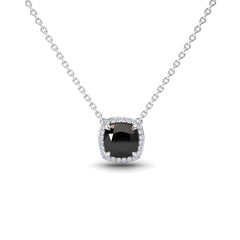
Opaque · DramaticDense with graphite and mineral inclusions that absorb light. Not graded on the traditional color scale, and increasingly popular in modern and men’s jewelry. See black diamonds.
April Birthstone Meaning & Symbolism
The April birthstone stands for strength, clarity and enduring love.
Invincibility, Eternal Love, and Unbreakable Bonds
Diamond’s symbolism comes straight from its physics: it is the hardest, most enduring material on Earth. Legends call diamonds splinters of falling stars, lightning made solid, or tears of the gods. In 1477, Archduke Maximilian of Austria gave Mary of Burgundy the first documented diamond engagement ring, starting a tradition that became a near-universal symbol of commitment.
Clarity, Healing, and Protection
In the Middle Ages, diamonds were believed to protect against poison and plague and to give courage in battle. Today diamond stands for clarity and purity of intent. For a house built on radical transparency, a gem from the least transparent corner of the jewelry trade is exactly where clarity matters most.
The 60th and 75th Anniversary Stone
Diamond is the traditional gemstone for the 60th and 75th wedding anniversaries, honoring the rarest kind of endurance. It is also the near-universal choice for engagement rings, and the gift of choice for April birthdays and anyone whose love is built to last.
The History of the April Birthstone
- Ancient India
- Diamonds were first gathered from the rivers and streams of India, traded among royalty as early as the 4th century BCE. India was the world’s main source of diamonds for well over a thousand years.
- 1400s
- Diamonds reached Western Europe through Venetian trade routes and became fashionable among the aristocracy. In 1477, Archduke Maximilian gave Mary of Burgundy the first documented diamond engagement ring.
- 1700s–1800s
- Brazil’s diamond fields opened in the 1720s, and the discoveries in South Africa in the late 1860s and 1870s transformed global supply.
- 1905
- The Cullinan, the largest gem-quality rough diamond ever found at 3,106 carats, was unearthed at the Premier Mine in South Africa. It was cut into 9 major and 96 smaller stones; the two largest, Cullinan I (530.4 ct) and Cullinan II (317.4 ct), are in the British Crown Jewels.
- 1912
- The National Association of Jewelers, now Jewelers of America, named diamond the birthstone for April on the modern list.
- Famous stones
- The Hope Diamond (45.52 ct, deep blue) is at the Smithsonian. The Koh-i-Noor (105.6 ct), “Mountain of Light” in Persian, passed through Mughal, Persian and Sikh rulers before entering the British Crown Jewels, and its ownership is still disputed.
Natural vs Lab-Grown Diamonds
Lab-grown diamonds are real diamonds. They have the same chemical composition (pure carbon), crystal structure, hardness (10 Mohs) and optical properties as diamonds mined from the earth. The only difference is origin: one formed over billions of years underground, the other was grown in a controlled laboratory using HPHT or CVD methods.
Lab-grown diamonds cost far less than comparable natural diamonds. At TrueSanity, we offer both, and we tell you exactly which you are getting, along with every cost in the chain. Read our lab-grown diamond guide for an honest comparison.
Diamond Alternatives for April
If you want the April look for less, the closest option is a lab-grown diamond, because it is a real diamond. Clear stones that look like diamond, sometimes called a “poor man’s diamond,” include white sapphire, white topaz, zircon and clear quartz (rock crystal and Herkimer “diamonds”).
They are not diamonds. All of them are softer, so they scratch and lose their polish faster, and none has diamond’s fire. White sapphire is the most durable of them at 9 Mohs. Whatever you choose, ask the jeweler to name the stone exactly.
Four Ways to Wear Diamond
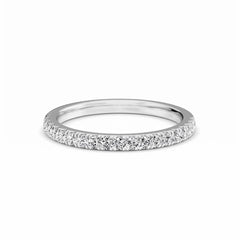
Each piece ships with a Transparency Manifest. No hidden markups. Just the stone, the craft, and the truth.




How to Choose an April Birthstone Diamond
Cut first
Cut decides how much a diamond sparkles. A well-cut diamond looks bigger and brighter than a poorly cut one of the same weight.
Then color
G to J looks white to most eyes once set. D to F costs more for a difference that is hard to see in jewelry.
Eye-clean is enough
You do not need flawless. A diamond with no inclusions you can see without magnification looks the same on the hand.
Natural or lab-grown
Both are real diamonds. Decide on origin and budget, and make sure the jeweler tells you which one you are buying.
For the full 4Cs, read our diamond guide.
How to Care for Your April Birthstone Diamond
Diamond is the most durable gemstone, but it is not indestructible. Nothing but another diamond can scratch it, yet a hard knock at the wrong angle can chip it along a cleavage plane. Clean diamond jewelry with warm, soapy water and a soft brush, or an ultrasonic cleaner, which is safe for most diamonds.
The real risk is the setting, not the stone. Have prongs and mountings checked by a jeweler from time to time so your diamond stays secure, and avoid harsh chemicals that can damage the metal. With reasonable care, a diamond will outlast everything else you own.
Nearly Indestructible
10 on the Mohs scale. Only another diamond can scratch it, though a sharp knock can chip it.
Easy Cleaning
Warm, soapy water and a soft brush, or an ultrasonic cleaner. Regular cleaning keeps the sparkle at its best.
Check the Setting
The stone is nearly indestructible; the setting is not. A loose prong is the only real threat to your diamond.
Nocturnal Luxury, Radical Transparency
What an April birthstone piece really costs
No gemstone has been more opaque about its pricing than diamond. This is the live Transparency Manifest of a real diamond piece: metal, stones, craft, shipping, and what we make. When its costs change, this changes with them.
How the Transparency Manifest works →White Diamond Hexagon Halo Stud Earrings - Kiara
Birthstone for Every Day in April
Whether you’re born on April 1st, April 15th, or April 30th, the birthstone for your date is diamond. Birthstones are assigned by month, not by individual day. What does change is your zodiac sign: April 1–19 is Aries, April 20–30 is Taurus.
Apr 1–19 · Aries
Fire sign · Ruled by Mars
Diamond amplifies Aries’ natural boldness and fearless energy: a stone whose very name means “invincible,” paired with the sign that charges forward first.
Apr 20–30 · Taurus
Earth sign · Ruled by Venus
Diamond resonates with Taurus’s love of lasting beauty, real quality, and relationships built to endure.
April Birthstone by Date: Quick Reference
| Dates | Birthstone | Zodiac sign | Color |
|---|---|---|---|
| April 1st–5th | Diamond | Aries ♈︎ | Colorless |
| April 6th–10th | Diamond | Aries ♈︎ | Colorless |
| April 11th–15th | Diamond | Aries ♈︎ | Colorless |
| April 16th–19th | Diamond | Aries ♈︎ | Colorless |
| April 20th–25th | Diamond | Taurus ♉︎ | Colorless |
| April 26th–30th | Diamond | Taurus ♉︎ | Colorless |
The April 1st birthstone is diamond.The April 2nd birthstone is diamond.The April 3rd birthstone is diamond.The April 4th birthstone is diamond.The April 5th birthstone is diamond.The April 6th birthstone is diamond.The April 7th birthstone is diamond.The April 8th birthstone is diamond.The April 9th birthstone is diamond.The April 10th birthstone is diamond.The April 11th birthstone is diamond.The April 12th birthstone is diamond.The April 13th birthstone is diamond.The April 14th birthstone is diamond.The April 15th birthstone is diamond.The April 16th birthstone is diamond.The April 17th birthstone is diamond.The April 18th birthstone is diamond.The April 19th birthstone is diamond (last Aries date).The April 20th birthstone is diamond (Taurus begins).The April 21st birthstone is diamond.The April 22nd birthstone is diamond.The April 23rd birthstone is diamond.The April 24th birthstone is diamond.The April 25th birthstone is diamond.The April 26th birthstone is diamond.The April 27th birthstone is diamond.The April 28th birthstone is diamond.The April 29th birthstone is diamond.The April 30th birthstone is diamond.
April Birthstone FAQs
What is the April birthstone?
The April birthstone is diamond, the hardest natural material on Earth and one of the most iconic diamond gemstones in history. Known for its brilliance, durability, and rarity, diamonds are among the most recognized precious gemstones in fine jewelry. Diamond is the sole modern birthstone assigned to April.
What does the April birthstone diamond symbolize?
Diamond symbolizes invincibility, eternal love, and unbreakable bonds. As a gemstone, diamonds are associated with strength, permanence, commitment, and timeless beauty. These qualities have made diamond jewelry a meaningful choice for engagement rings, anniversaries, and important milestones.
Are lab-grown diamonds real diamonds?
Yes. Lab-grown diamonds are real diamonds. They have the identical chemical composition (pure carbon), crystal structure, hardness (10 Mohs), and optical properties as natural, earth-mined diamonds. The only difference is origin: one formed billions of years underground, while the other was grown in a controlled laboratory using HPHT or CVD methods. Both lab-grown diamonds and natural diamonds are genuine diamond gemstones with the same physical properties.
What colors do diamonds come in?
Diamonds occur in virtually every color, including yellow, brown, pink, blue, green, orange, red, and black. These natural diamond colors create unique diamond varieties, with rare shades known as fancy color diamonds. The value of colored diamonds depends on factors such as rarity, intensity, and overall appearance.
What is the largest diamond ever found?
The Cullinan diamond is the largest gem-quality rough diamond ever found, weighing 3,106 carats before being cut into multiple stones. This famous natural diamond remains one of the world's most significant diamond gemstones. Its history continues to make it one of the most recognized diamonds ever discovered.
Why are diamonds so expensive at traditional jewelers?
Diamond pricing varies based on factors such as rarity, quality, sourcing, and retail markups. The value of a diamond is also influenced by the 4Cs of diamond quality: cut, color, clarity, and carat weight. Understanding these factors helps customers better evaluate diamond jewelry pricing.
How does TrueSanity's Transparency Manifest work?
Every TrueSanity diamond piece ships with a Transparency Manifest that itemizes your stone cost, artisan labor, logistics, and our honest protocol fee. This gives customers a clearer understanding of the materials, craftsmanship, and value behind their diamond jewelry. No hidden markups are involved.
Does the April birthstone change depending on the date?
No. The April birthstone is diamond for every day of the month. Whether someone is born at the beginning or end of April, the official April birthstone remains diamond. The zodiac sign changes depending on the birth date, but the gemstone stays the same.
What are the 4Cs of diamonds?
The 4Cs of diamonds are cut, color, clarity, and carat weight. These diamond quality factors help determine a stone's appearance, rarity, and overall value. Understanding the 4Cs can help shoppers make more informed decisions when selecting diamond jewelry.
How do I choose a quality diamond?
Choosing a quality diamond involves understanding the 4Cs, including cut, color, clarity, and carat weight. Diamond certification and personal preferences can also help guide the selection process. These factors allow buyers to compare diamonds based on quality and value.
What is the difference between natural and lab-grown diamonds?
Natural diamonds form beneath the Earth's surface over billions of years, while lab-grown diamonds are created in controlled laboratory environments. Both have the same chemical composition, crystal structure, hardness, and optical properties. The main difference between natural diamonds and lab-grown diamonds is their origin.
Does April have two birthstones?
No. Diamond is the one modern birthstone for April, on the list set in 1912 by the National Association of Jewelers (now Jewelers of America) and on today's lists. Some older lists also named sapphire for April, and clear stones such as white sapphire, white topaz and clear quartz are popular alternatives, but the April birthstone is diamond.
What is the original birthstone for April?
Diamond has been the April birthstone on the modern list since 1912. Older lists from the 15th to 20th centuries named diamond and sometimes sapphire for April, so diamond is both the original and the current April birthstone.
What is a poor man's diamond?
"Poor man's diamond" is an informal name for clear, affordable stones that look like diamond, such as white topaz, white sapphire, zircon and clear quartz (including Herkimer "diamonds"). They are not diamonds and are softer, so they scratch and dull more easily. If you want the real April birthstone for less, a lab-grown diamond is a real diamond at a lower price.
Find Your Diamond
Birthstones by month
Sources: GIA, April birthstone · Jewelers of America, which set the modern birthstone list in 1912 as the National Association of Jewelers · International Gem Society, for modern and traditional birthstone lists.
Clarity is a Form of Luxury.