







October Birthstone
The Opal
Laid Bare
The October birthstone is opal. No two have ever looked alike. Each holds a shifting universe of color created by microscopic silica spheres bending light into the full visible spectrum. Romans called it the king of gems. Bedouins said it fell from the sky during thunderstorms. We put it in honest jewelry and show you what it costs.
What Is the October Birthstone?
The October birthstone is opal, a hydrated amorphous form of silica (SiO₂·nH₂O) that contains between 3% and 20% water trapped within its structure. It is not a crystal. It has no crystal structure at all. Instead, opal is made of millions of tiny silica spheres stacked in three-dimensional grids, and it is this arrangement that produces the phenomenon opal is famous for: play-of-color.
When light enters the stone and passes through these orderly sphere layers, it diffracts, splitting into the colors of the visible spectrum. The result is a shifting, shimmering display of blue, green, red, orange, and violet that moves as you tilt the stone. No two opals produce the same pattern. Every stone is genuinely one of a kind.
The name comes from the Sanskrit upala, meaning "precious stone," and the Latin opalus, meaning "to see a change of color." Opal ranks 5.5 to 6.5 on the Mohs hardness scale, making it significantly softer than sapphire or ruby. It requires more careful handling, but that fragility is part of its character. October also claims tourmaline as a modern alternative birthstone, added for people who want something tougher for daily wear.
October Birthstone Meaning & Symbolism
King of Gems and Captured Lightning
Romans adored opal above almost every other stone. Because its play-of-color seemed to contain the fire of ruby, the green of emerald, the blue of sapphire, and the gold of topaz all in one gem, they believed it held the powers and virtues of every colored stone combined. They called it the "Cupid Stone" and associated it with love, hope, and purity. Pliny the Elder wrote that opal displayed a play of color more beautiful than any painter could achieve.
"There is in them a softer fire than the ruby, there is the brilliant purple of the amethyst, and the sea green of the emerald, all shining together in incredible union."
— Pliny the Elder, Natural History, 1st century CENomadic Arab tribes believed opal fell to Earth during thunderstorms and that each stone held captured lightning. Aboriginal Australians saw opal as the footprint of the Creator, left shimmering in the landscape as a trail of color. Greeks believed it bestowed the gift of prophecy and protection from disease. For most of recorded history, opal was considered one of the luckiest stones on Earth.
The Bad Luck Myth (and Who Killed It)
That reputation changed abruptly in 1829 when Sir Walter Scott published Anne of Geierstein, a novel featuring a woman whose enchanted opal lost its fire when touched by holy water, killing its owner. The book was enormously popular. European opal sales crashed by roughly 50% and stayed suppressed for decades. It took Queen Victoria to rescue opal's reputation. She wore opals publicly, gave them as gifts to her daughters, and made them fashionable again at the British court. The bad luck superstition lingers, but it has no historical basis before 1829. It was fiction. One novel did the damage.
The 14th Wedding Anniversary Stone
Opal is the traditional gemstone for the 14th wedding anniversary. Given its symbolism of hope, creativity, and emotional truth, it makes a striking and personal birthday gift for anyone born in October.
The History of the October Birthstone
Opals have been prized since at least 4,000 BCE, with some of the earliest artifacts traced to Ethiopia. The Romans sourced their opals primarily from mines in what is now Slovakia and Hungary. But the story of opal changed permanently with Australia.
Australia produces roughly 95% of the world's precious opal. The country's opal fields are scattered across New South Wales, South Australia, and Queensland, each producing distinct types. Lightning Ridge in New South Wales is the world capital of black opal. Coober Pedy in South Australia, whose name derives from the Aboriginal term for "boys' waterhole," is known as the opal capital of the world, producing primarily white and crystal opal. Miners in Coober Pedy live underground to escape the desert heat, in homes carved directly into the opal-bearing sandstone.
The Olympic Australis, found at Coober Pedy's Eight Mile opal field in 1956 (the year Melbourne hosted the Olympics), weighs 17,000 carats and remains the largest and most valuable gem opal ever discovered. More recently, Ethiopia's Welo Province has become an important new source, producing opals with vivid play-of-color that compete with Australian material at significantly lower price points.
How Play-of-Color Works
Opal's play-of-color is not pigment. It's structural. Millions of tiny silica spheres (typically 150 to 400 nanometers in diameter) are arranged in orderly, repeating layers inside the stone. When white light enters and hits these layers, it diffracts: the light waves bend and split into their component colors, each wavelength reflecting at a slightly different angle. The sphere size determines which colors you see. Larger spheres produce reds and oranges (the rarest and most valuable play-of-color). Smaller spheres produce blues and greens.
The body color of the opal matters enormously. A dark background (black opal) makes the play-of-color appear more vivid and intense because the contrast is stronger. A white or light background (white opal) produces softer, more pastel flashes. Crystal opal, which is transparent or semi-transparent, allows light to pass through the stone entirely, creating a luminous, glowing quality.
This is why no two opals look alike. The size, uniformity, and arrangement of those silica spheres vary from stone to stone, producing patterns that gemologists describe as "pinfire," "broadflash," "rolling flash," "harlequin," and dozens of other terms. Harlequin pattern, where large, distinct patches of color form a checkerboard effect, is the rarest and most valuable.
The Family
Five Types of Opal
Same mineral. Different body color, different fire, different personality.
Black Opal
Lightning Ridge · Most Valuable
Dark grey to blue-black body color that makes play-of-color pop with maximum contrast. The most valuable and sought-after variety. Almost all fine black opal comes from Lightning Ridge, New South Wales. Harlequin pattern black opals can sell for over $10,000 per carat.
White Opal
Coober Pedy · Classic
Light or white body color with softer, pastel play-of-color. The most common and commercially available type. Coober Pedy is the primary source. Beautiful and affordable, but less dramatic than black opal.
Boulder Opal
Queensland · Natural Backing
A thin seam of precious opal naturally bonded to its ironstone host rock. The dark ironstone acts as a natural backing that intensifies play-of-color. Found exclusively in Queensland. Each stone keeps a piece of the earth it formed in.
Crystal Opal
Transparent · Luminous
Transparent to semi-transparent body that allows light to pass through, creating a glowing, three-dimensional quality. Play-of-color appears to float inside the stone. Found at Coober Pedy and Lightning Ridge. Prized for its ethereal, glass-like appearance.
Fire Opal
Mexico · Transparent Warmth
Warm yellow, orange, or red body color, often transparent, with or without play-of-color. Mexico is the primary source. Fire opal is sometimes faceted like a traditional gemstone rather than cut as a cabochon. Valued for its body color alone, even without play-of-color.
Where Opals Are Found
Four Sources, Four Stories
Australia dominates, but the opal world is expanding.
Lightning Ridge, Australia
Black Opal Capital
The world's premier source of black opal since the early 1900s. Small-scale miners working underground in semi-arid New South Wales. Produces the most valuable opals on Earth. The town's population is under 3,000, but its stones sell at auction worldwide.
Coober Pedy, Australia
Opal Capital of the World
South Australia's underground mining town. Produces most of the world's white and crystal opal. Miners live in subterranean homes carved into the same sandstone that yields the gems. The Olympic Australis (17,000 carats) was found here in 1956.
Ethiopia (Welo)
The New Challenger
Ethiopia's Welo Province emerged in the 2000s as a serious opal source. Vivid play-of-color at a fraction of Australian prices. Hydrophane opal (absorbs water, temporarily losing play-of-color). Still maturing as a market but already producing world-class stones.
Mexico
Fire Opal · Querétaro
Mexico's Querétaro state produces the finest fire opals: warm orange, red, and yellow stones, often faceted. Some show play-of-color; many are valued purely for body color. Mines sit in dense pine and oak forests accessible by winding dirt roads.
October Birthstone Jewelry
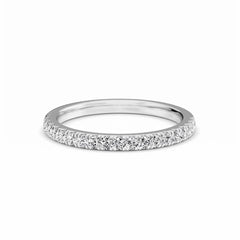
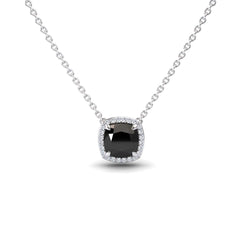
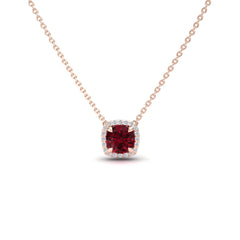
Four Ways to Wear Opal
Each piece ships with a Transparency Manifest. No hidden markups. Just the stone, the craft, and the truth.


How to Care for Your October Birthstone Opal
Opal is beautiful but delicate. At 5.5 to 6.5 on the Mohs scale, it's softer than quartz, which means it can scratch if stored alongside harder gems. Its water content (3% to 20%) makes it sensitive to extreme heat, dryness, and rapid temperature changes. A dry environment can cause crazing: fine surface cracks that dull the play-of-color permanently.
Clean with a damp, soft cloth. Never use ultrasonic or steam cleaners. Avoid household chemicals, perfumes, and prolonged submersion in water. Put opal on last when getting dressed and take it off first when you get home. Store in a cool, slightly humid environment. A protective bezel setting is far smarter than prongs for opal rings. With sensible care, opal jewelry will keep its fire for decades.
Illustrative example. Actual manifests vary by piece and are included with every order.
Every Stone Is Unique
No two opals share the same play-of-color pattern. What you see in your stone exists nowhere else on Earth. That's not marketing copy. It's physics.
Handle With Awareness
Opal contains water and is sensitive to heat, dryness, and chemicals. Clean with a damp cloth only. No ultrasonic or steam cleaners. Store away from extreme temperatures. Bezel settings protect the stone best.
Type & Origin Disclosed
Every TrueSanity opal identifies its type (black, white, boulder, crystal, or fire), origin, and whether it's a solid, doublet, or triplet. Full transparency. No surprises.
Looking for October's tougher alternative birthstone? Tourmaline has its own dedicated page.
Read our October Birthstone Tourmaline guide →Find Your Date
What Is the Birthstone for Your October Birthday?
The birthstone for every day in October is opal (with tourmaline as a modern alternative). Your zodiac sign changes: Libra (Oct 1–22) or Scorpio (Oct 23–31). Select your date.
Select a date above to see your birthstone details
Birthstone for Every Day in October
Whether you're born on October 1st, October 15th, or October 31st, the birthstone for your date is opal (with tourmaline as a modern alternative). What changes is your zodiac sign: October 1–22 is Libra, October 23–31 is Scorpio.
♎ Oct 1–22 · Libra
Air sign. Ruled by Venus. Opal's shifting play-of-color mirrors Libra's ability to see every side of a situation. Both prize beauty, balance, and the art of holding contradictions gracefully.
♏ Oct 23–31 · Scorpio
Water sign. Ruled by Pluto. Opal's fire beneath the surface resonates with Scorpio's intensity and emotional depth. Both reveal more the closer you look.
October Birthstone by Date: Quick Reference
Oct 1st–5th: Opal (Libra ♎)
Oct 6th–11th: Opal (Libra ♎)
Oct 12th–17th: Opal (Libra ♎)
Oct 18th–22nd: Opal (Libra ♎)
Oct 23rd–27th: Opal (Scorpio ♏)
Oct 28th–31st: Opal (Scorpio ♏)
The October 1st birthstone is opal. The October 2nd birthstone is opal. The October 3rd birthstone is opal. The October 4th birthstone is opal. The October 5th birthstone is opal. The October 6th birthstone is opal. The October 7th birthstone is opal. The October 8th birthstone is opal. The October 9th birthstone is opal. The October 10th birthstone is opal. The October 11th birthstone is opal. The October 12th birthstone is opal. The October 13th birthstone is opal. The October 14th birthstone is opal. The October 15th birthstone is opal. The October 16th birthstone is opal. The October 17th birthstone is opal. The October 18th birthstone is opal. The October 19th birthstone is opal. The October 20th birthstone is opal. The October 21st birthstone is opal. The October 22nd birthstone is opal (last Libra date). The October 23rd birthstone is opal (Scorpio begins). The October 24th birthstone is opal. The October 25th birthstone is opal. The October 26th birthstone is opal. The October 27th birthstone is opal. The October 28th birthstone is opal. The October 29th birthstone is opal. The October 30th birthstone is opal. The October 31st birthstone is opal.
Questions
October Birthstone FAQs
The October birthstone is opal, a hydrated silica known for its play-of-color. October also has tourmaline as a modern alternative birthstone, added for people who prefer a harder stone for daily wear.
Opal symbolizes hope, creativity, truth, and emotional depth. Romans called it the king of gems. Bedouins believed it held captured lightning. It is the traditional gemstone for the 14th wedding anniversary.
No. The bad luck superstition has no basis before 1829, when Sir Walter Scott published a novel featuring a cursed opal. The book crashed European opal sales by 50%. Queen Victoria restored the stone's reputation by wearing and gifting opals publicly.
Play-of-color is the shifting rainbow effect inside precious opal. It's caused by light diffracting through millions of microscopic silica spheres. Larger spheres produce reds and oranges (rarest). Smaller spheres produce blues and greens. No two opals have the same pattern.
Black opal from Lightning Ridge, Australia is the most valuable. Its dark body color creates maximum contrast with the play-of-color. Harlequin pattern stones can sell for over $10,000 per carat.
At 5.5 to 6.5 Mohs, opal can be worn in rings with bezel settings but requires careful handling. Avoid impacts, extreme heat, and ultrasonic cleaners. Earrings and pendants are the safest choices for daily wear.
Every opal piece includes a Manifest showing type, origin, stone cost, craftsmanship, and our protocol fee. We also disclose whether the stone is a solid, doublet, or triplet.
No. Every day in October has opal (with tourmaline as a modern alternative). Your zodiac changes: October 1–22 is Libra, October 23–31 is Scorpio.