







December Birthstone
The Tanzanite
Laid Bare
The December birthstone is tanzanite, zircon, or turquoise. We lead with tanzanite because it exists in only one place on Earth: a strip of land smaller than Manhattan, in the shadow of Mount Kilimanjaro. Supply is nearing exhaustion. Tiffany's called it the most important gemstone discovery in over 2,000 years. We sell it with every cost visible.
What Is the December Birthstone?
December has three birthstones: tanzanite, zircon, and turquoise. Tanzanite is the most recent addition, added to the official list in 2002 by the American Gem Trade Association. It was the first change to the birthstone list since 1912. Tanzanite is a variety of the mineral zoisite, found in a single location on Earth: the Merelani Hills in northern Tanzania, roughly 90 kilometers southeast of Arusha, in the shadow of Mount Kilimanjaro.
The mining area is approximately 4.3 miles long and 1.2 miles wide. That's roughly twice the footprint of Central Park in New York. There is no other known deposit of gem-quality tanzanite anywhere on the planet. Geologists estimate the likelihood of finding another deposit at one in a million, making tanzanite roughly 1,000 times rarer than diamond.
Tanzanite is trichroic: it displays three different colors from three different viewing angles. In its natural state, those colors are blue, violet, and burgundy. Heat treatment (370–390°C) removes the brownish component, leaving a dichroic stone that shifts between violet-blue and blue-violet. Almost all commercial tanzanite is heat-treated. The treatment is permanent and stable. At 6 to 6.5 on the Mohs scale, tanzanite is softer than most colored gemstones and requires careful handling.
Tanzanite Meaning & Symbolism
The Gemstone of a Generation
Tanzanite has been called "the gemstone of a generation" because this generation may be the last able to buy stones from the primary market before the supply runs out. That's not marketing language. It's geology. The mines are finite, the deposit is singular, and production is declining. Every tanzanite sold today carries the weight of genuine scarcity.
"The most beautiful blue stone to be discovered in over 2,000 years."
— Henry B. Platt, Tiffany & Co., 1968The Maasai people of Tanzania have their own origin story: a bolt of lightning struck the foothills of Kilimanjaro, setting the grasslands ablaze. When the fires cooled, the brown zoisite crystals in the earth had been transformed into shimmering blue-violet gems. The Maasai traditionally give blue beads to mothers of newborn children, a blessing for health and a positive life. The Tanzanite Foundation has proposed extending that tradition to Western cultures, positioning tanzanite as "the gem of birth."
The 24th Wedding Anniversary Stone
Tanzanite is the gemstone for the 24th wedding anniversary. Given that it may not be commercially available forever, a tanzanite anniversary piece is increasingly a gift that comes with a built-in timeline.
The Discovery of Tanzanite
In January 1967, Manuel de Souza, a Goan tailor and part-time gold prospector living in Arusha, found fragments of transparent blue-violet crystals on a ridge near the Merelani Hills. He initially thought they were peridot. When testing proved otherwise, he concluded they were dumortierite. They were neither.
The stones reached John Saul, a Nairobi-based geologist, who sent samples to his father Hyman Saul, a vice president at Saks Fifth Avenue in New York. Hyman took them across the street to the Gemological Institute of America, who identified them as a previously unknown gem variety of the mineral zoisite. The scientific name "blue zoisite" was correct but sounded uncomfortably close to "blue suicide." Henry B. Platt, great-grandson of Louis Comfort Tiffany and a vice president of Tiffany & Co., renamed it "tanzanite" and launched a campaign declaring it could be found "in two places: in Tanzania and at Tiffany's."
An estimated two million carats were mined before the Tanzanian government nationalized the mines in 1971. Today, the government has built a security wall around the entire mining area with a single military checkpoint for entry and exit. The mines are divided into four blocks (A through D), with only Block C still commercially producing rough tanzanite at meaningful scale.
December's Second Stone: Zircon
4.4 Billion Years Old. Not Cubic Zirconia.
First: zircon is not cubic zirconia (CZ). They are completely unrelated. The name confusion has been disastrous for zircon's reputation. Zircon is a natural mineral (zirconium silicate) and one of the oldest materials on Earth. Zircon crystals from the Jack Hills of Western Australia have been dated to 4.4 billion years old, predating the formation of the Earth's crust and making them the oldest known terrestrial materials.
Blue zircon is the traditional December birthstone and one of the most brilliant natural gemstones. Zircon has a refractive index close to diamond and displays strong fire (dispersion). Look closely at a well-cut zircon and you'll notice doubled facet edges: an effect of its double refraction that creates a distinctive, almost fuzzy sparkle that diamond doesn't have. It's how gemologists spot zircon immediately.
Blue zircon is almost always heat-treated from brownish or reddish material. The name may come from the Persian zargun (gold-colored) or the Arabic zarqun (vermillion). At 6 to 7.5 Mohs, zircon is moderately hard but can be brittle at the edges of facets. Cambodia, Sri Lanka, and Myanmar are the primary sources. In the Middle Ages, zircon was believed to aid sleep and bring prosperity.
December's Third Stone: Turquoise
7,000 Years of Sacred Blue
Turquoise is one of the oldest gemstones in human history. It has been mined, carved, and worn for over 7,000 years. The name comes from the French pierre turquoise, meaning "Turkish stone," because it first reached Europe through Turkish trade routes. Turquoise itself is a copper aluminum phosphate, and the copper is what gives it that iconic robin's-egg blue.
Egyptian pharaohs wore turquoise. King Tutankhamun's burial mask is inlaid with it. The Sinai Peninsula mines that produced those stones have been dated to 6,000 BCE, making them among the oldest known mines in the world. Turquoise is sacred to Native American cultures, especially the Navajo, Zuni, and Pueblo peoples, who incorporated it into jewelry, ceremony, and daily life for centuries. The squash blossom necklace, one of the most iconic pieces of Native American jewelry, centers on turquoise.
Iran's Nishapur mines produce the finest turquoise on Earth: an intense, even blue without visible matrix (veining). Persian tradition holds that turquoise seen under the first moon of the new year brings good luck. At 5 to 6 Mohs, turquoise is soft and porous. Most commercial turquoise is stabilized (impregnated with resin) to improve durability and color permanence. The finest untreated material from Iran commands premium prices.
Three Stones, One Month
December's Birthstones
Tanzanite, zircon, and turquoise. Three stones spanning 4.4 billion years of Earth's history and 7,000 years of human civilization.
Tanzanite
1967 · Only One Source · Nearing Exhaustion
Blue-violet zoisite found only at Merelani Hills, Tanzania. Trichroic. 1,000x rarer than diamond. Added to the birthstone list in 2002. Supply may be exhausted within this generation.
Blue Zircon
4.4 Billion Years Old · Not CZ
One of Earth's oldest minerals. Brilliant fire, double refraction, diamond-like sparkle with doubled facet edges. Heat-treated from brownish material. Not cubic zirconia. Not even close.
Turquoise
7,000 Years · Sacred · Copper Blue
One of civilization's oldest gems. King Tut's burial mask. Sacred to Native American peoples. Iran's Nishapur mines produce the world's finest. Soft (5-6 Mohs) and often stabilized.
December Birthstone Jewelry
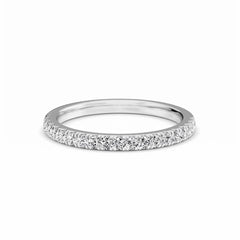
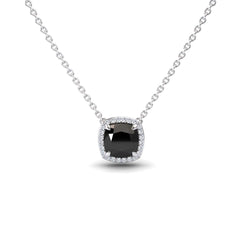
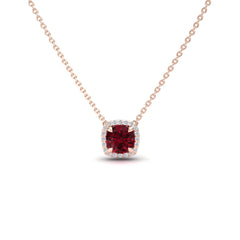
Four Ways to Wear Tanzanite
Each piece ships with a Transparency Manifest. No hidden markups.


How to Care for December Birthstone Tanzanite
Tanzanite at 6 to 6.5 Mohs is the softest stone on any modern birthstone list alongside opal. It requires care. Avoid impacts, sudden temperature changes, and ultrasonic or steam cleaners. Clean with warm soapy water and a soft cloth only. Tanzanite is sensitive to thermal shock: moving from a warm room to cold outdoor air too quickly can cause fractures. Never leave tanzanite in a hot car or under direct sunlight for extended periods.
Protective bezel settings are strongly recommended for tanzanite rings. Earrings and pendants are the safest jewelry choices for daily wear. Store separately from all harder gemstones. With thoughtful handling, tanzanite's extraordinary color will last a lifetime. Given that the supply is finite, the stone itself may outlast the mine that produced it.
Illustrative example. Actual manifests vary by piece and are included with every order.
One Place on Earth
Tanzanite comes from a single 4.3-mile strip near Mount Kilimanjaro. No other deposit exists. 1,000x rarer than diamond. When the mines are exhausted, the primary market closes permanently.
Handle With Intention
6 to 6.5 Mohs. Warm soapy water only. No ultrasonic, no steam. Bezel settings for rings. Sensitive to thermal shock. Earrings and pendants are safest for daily wear.
Grade & Treatment Disclosed
Every TrueSanity tanzanite identifies its color grade (A through AAAA), heat-treatment status, and origin on the Transparency Manifest. Because this stone is too rare for ambiguity.
Find Your Date
What Is the Birthstone for Your December Birthday?
The birthstone for every day in December is tanzanite, zircon, or turquoise. Sagittarius (Dec 1–21) or Capricorn (Dec 22–31). Select your date.
Select a date above to see your birthstone details
Birthstone for Every Day in December
Whether you're born on December 1st, December 15th, or December 31st, the birthstone for your date is tanzanite (with zircon and turquoise as alternatives). What changes is your zodiac sign: December 1–21 is Sagittarius, December 22–31 is Capricorn.
♐ Dec 1–21 · Sagittarius
Fire sign. Ruled by Jupiter. Tanzanite's trichroic nature shows different colors from different perspectives. That quality mirrors Sagittarius's lifelong search for truth through exploration and shifting viewpoints.
♑ Dec 22–31 · Capricorn
Earth sign. Ruled by Saturn. Tanzanite's singular source and finite supply resonate with Capricorn's understanding of scarcity, discipline, and the value of things that cannot be manufactured or replaced.
December Birthstone by Date: Quick Reference
Dec 1st–5th: Tanzanite (Sagittarius ♐)
Dec 6th–11th: Tanzanite (Sagittarius ♐)
Dec 12th–17th: Tanzanite (Sagittarius ♐)
Dec 18th–21st: Tanzanite (Sagittarius ♐)
Dec 22nd–26th: Tanzanite (Capricorn ♑)
Dec 27th–31st: Tanzanite (Capricorn ♑)
The December 1st birthstone is tanzanite. The December 2nd birthstone is tanzanite. The December 3rd birthstone is tanzanite. The December 4th birthstone is tanzanite. The December 5th birthstone is tanzanite. The December 6th birthstone is tanzanite. The December 7th birthstone is tanzanite. The December 8th birthstone is tanzanite. The December 9th birthstone is tanzanite. The December 10th birthstone is tanzanite. The December 11th birthstone is tanzanite. The December 12th birthstone is tanzanite. The December 13th birthstone is tanzanite. The December 14th birthstone is tanzanite. The December 15th birthstone is tanzanite. The December 16th birthstone is tanzanite. The December 17th birthstone is tanzanite. The December 18th birthstone is tanzanite. The December 19th birthstone is tanzanite. The December 20th birthstone is tanzanite. The December 21st birthstone is tanzanite (last Sagittarius date). The December 22nd birthstone is tanzanite (Capricorn begins). The December 23rd birthstone is tanzanite. The December 24th birthstone is tanzanite. The December 25th birthstone is tanzanite. The December 26th birthstone is tanzanite. The December 27th birthstone is tanzanite. The December 28th birthstone is tanzanite. The December 29th birthstone is tanzanite. The December 30th birthstone is tanzanite. The December 31st birthstone is tanzanite.
Questions
December Birthstone FAQs
December has three birthstones: tanzanite (added in 2002), zircon, and turquoise. Tanzanite is the most recent and is found in only one location on Earth.
Tanzanite exists in a single deposit at the Merelani Hills in Tanzania, measuring roughly 4.3 miles by 1.2 miles. No other source has ever been found. 1,000 times rarer than diamond.
The supply is finite and declining. Industry experts call tanzanite "the gemstone of a generation" because this generation may be the last to buy from the primary market.
No. Completely unrelated. Zircon is a natural mineral and one of Earth's oldest materials (4.4 billion years). CZ is a synthetic diamond simulant.
A copper aluminum phosphate prized for over 7,000 years. Sacred to Native American cultures. King Tut's burial mask contains it. Iran's Nishapur mines produce the finest quality.
At 6 to 6.5 Mohs, tanzanite needs bezel settings and careful handling. Earrings and pendants are safer for daily wear. Avoid impacts and thermal shock.
Every tanzanite piece shows color grade (A through AAAA), treatment status, origin, stone cost, craftsmanship, and our protocol fee. No hidden markups.
No. Every day in December has tanzanite, zircon, and turquoise. Zodiac changes: December 1–21 is Sagittarius, December 22–31 is Capricorn.