


Diamond Engagement Ring vs Solitaire Ring: Which Style Is Right for You?
Choosing between a diamond engagement ring vs solitaire ring often starts with one simple question: do you want clean focus or added detail? Both styles can be beautiful, meaningful, and suited for a lifelong promise. The difference comes down to design, budget, lifestyle, and the story you want the ring to tell.
A solitaire ring is a ring that has one center gemstone, often a single diamond, set on a band without side stones. A diamond engagement ring is a broader category. It may be a solitaire, but it can also include halo rings, pavé bands, three-stone styles, side stones, mixed gemstones, or custom settings.
True Sanity approaches engagement rings with radical transparency: clear cost breakdowns, traceable origins, conflict-free diamonds, and jewelry made with recycled gold. That matters when comparing styles because the setting, stones, metal, and craftsmanship all shape the final ring price and meaning.
Use this comparison to understand what separates solitaire rings from other diamond rings, how each style wears, and how to choose a design that feels honest, personal, and lasting.
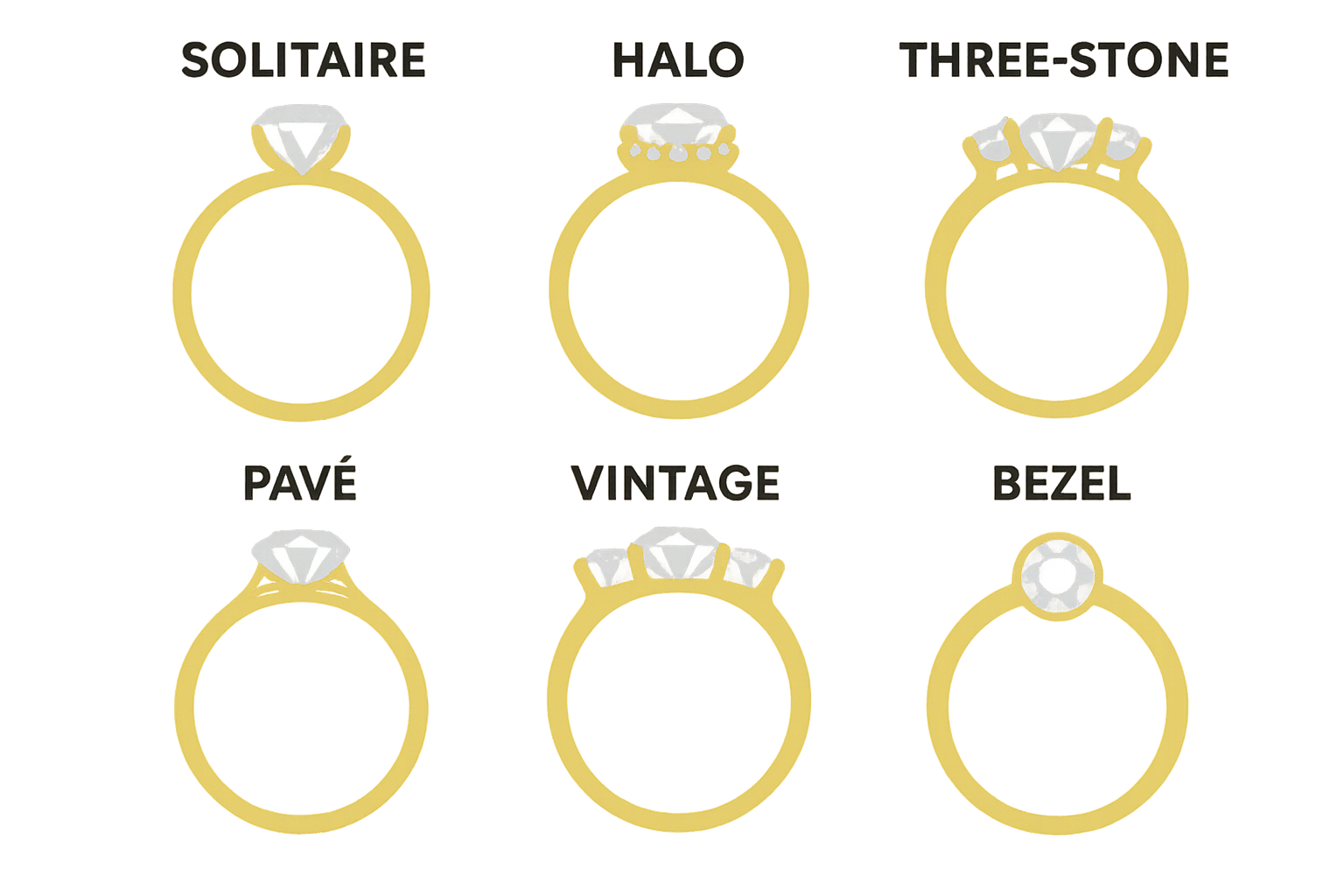
What a Diamond Engagement Ring Can Include
A diamond engagement ring is any engagement ring that features one or more diamonds. That broad definition leaves room for many designs, from a quiet solitaire diamond to a bold halo with small diamonds around the center stone.
Some engagement rings keep attention on one center diamond. Others add accent stones to increase sparkle or create a more detailed look. A diamond ring may use natural diamonds, lab-grown diamonds, recycled diamonds, or a mix of diamonds and another gemstone. The band may be plain, pavé, twisted, vintage-inspired, or custom-made.
Common diamond engagement ring styles include:
- Solitaire: one center diamond or gemstone with no side stones
- Halo: a center stone surrounded by a frame of small diamonds
- Pavé: tiny diamonds set into the band for extra shimmer
- Three-stone: a center diamond with one stone on each side
- Side-stone: accent diamonds placed along the shoulders of the band
- Gemstone-accented: diamonds paired with sapphire, emerald, ruby, moissanite, or another stone
The appeal of a diamond engagement ring is range. You can choose clean and modern, romantic and detailed, classic and traditional, or bold and sculptural. For many couples, this flexibility makes diamond rings appealing because the design can reflect personal style rather than follow one fixed look.
What Makes a Solitaire Engagement Ring Different
A solitaire engagement ring is defined by focus. The solitaire setting has only one featured stone, usually a center diamond, with no additional diamonds on the band or around the stone. The result is clean, timeless, and easy to recognize.
A solitaire diamond ring can be set in yellow gold, white gold, rose gold, or platinum. It may have a prong setting, bezel setting, cathedral setting, or low-profile design. While the overall look is simple, small choices still matter. The diamond cut, metal, prong shape, band width, and height of the setting all affect the finished ring.
A solitaire engagement ring is often chosen by people who value restraint and clarity. There is no visual competition between the center diamond and other stones. Every glance goes straight to the main gemstone.
Solitaire rings also pair well with many wedding bands. A plain band creates a minimal look. A diamond wedding band adds sparkle later without changing the original engagement ring. A curved or contoured band can fit around a low or unusually shaped setting.
For buyers who want a design that won't feel tied to one jewelry trend, a solitaire can be a strong choice. Its beauty comes from proportion, craftsmanship, and the quality of the center stone.
Solitaire vs Halo, Pavé, and Other Diamond Rings
The choice between solitaire and other diamond engagement rings is not about one being better. It's about how much detail you want and where you want the eye to go.
A solitaire ring places all attention on the center diamond. A halo adds a border of small diamonds around the center, often making the ring appear larger and brighter. Pavé engagement rings add diamonds along the band, creating shimmer across the finger. Three-stone rings bring symbolism and balance, while cluster styles create a fuller look using several stones.
| Style | Main Feature | Best For | Consider Before Buying |
|---|---|---|---|
| Solitaire | One center diamond or gemstone | Clean style, timeless appeal, easy wedding band pairing | Center stone quality is highly visible |
| Halo | Center stone framed by small diamonds | Added sparkle and a larger visual look | More tiny stones may need maintenance |
| Pavé | Small diamonds set along the band | Extra shimmer without changing the center stone | Pavé bands can be harder to resize |
| Three-stone | One center stone with two side stones | Symbolism, balance, and added presence | Side stones should match well |
| Cluster | Multiple stones grouped together | Bold sparkle and unique shapes | Cleaning can take more care |
A solitaire may feel classier to someone who loves quiet design. A halo may feel more expressive to someone who wants sparkle from every angle. A pavé band may suit someone who loves detail but still wants a central diamond. A three-stone ring may appeal to buyers who want visible meaning built into the design.
There's also a practical difference. Rings with small diamonds often need more inspection over time because tiny stones and prongs can loosen with daily wear. Solitaire rings can be easier to clean and maintain, though the center setting still needs regular checks.
How Style, Budget, and Lifestyle Shape the Right Choice
The right engagement ring should fit the person who will wear it every day. Style matters, but so do comfort, durability, budget, and long-term care.
A solitaire often lets more of the budget go toward the center diamond. Because there are no side stones or pavé details, the design can be simpler to price. If you want a 1-carat diamond solitaire ring, a 2-carat diamond solitaire ring, or even a 3-carat design, the center stone will drive most of the cost.
Other diamond rings may spread the budget across the center stone, accent diamonds, metal, and setting labor. A halo can create a larger look without requiring a much larger center diamond. A pavé band can add brilliance even if the center diamond is modest in size. These choices can be smart when the goal is overall sparkle rather than a single large stone.
Lifestyle should guide the setting. Someone who works with their hands may prefer a low solitaire, bezel setting, or sturdy band. Someone who enjoys statement jewelry may love halo rings or custom detail. Someone who wants easy cleaning and a smooth fit with wedding bands may lean toward a classic solitaire.
Before deciding, consider:
- Does the wearer prefer simple or detailed jewelry?
- Will the ring be worn during work, travel, exercise, or daily tasks?
- Should the ring sit flush with wedding bands?
- Is the budget focused on the center diamond or the whole design?
- Does the wearer want maximum sparkle or quiet elegance?
- Are natural diamonds, lab-grown diamonds, moissanite, or another gemstone being considered?
- Does the jeweler provide clear sourcing and cost details?
A ring should feel natural on the hand. If it looks beautiful but feels fragile, too high, or too ornate for daily life, it may not be the right fit.
Choosing a Diamond or Gemstone with Transparency
The stone at the center of the ring should be chosen with care. For solitaire rings, the center diamond carries the full visual weight of the design. For halo or pavé engagement rings, the center stone still matters, but accent diamonds also shape the finished look.
Cut affects sparkle more than many buyers realize. A well-cut diamond can look bright and lively even at a lower carat weight. Color and clarity matter too, but the best choice is not always the highest grade. An eye-clean diamond with strong cut quality can offer better beauty for the budget than a larger stone with weak proportions.
Some buyers compare diamond with moissanite. Moissanite is not a diamond, but it can be a beautiful gemstone choice for people who want a different type of sparkle and a lower price point. Others choose lab-grown diamonds for traceable origin and size flexibility, while some prefer natural diamonds for rarity and tradition.
Transparency matters across every option. Ask where the stones come from, whether they are natural, lab-grown, recycled, treated, or conflict-free. Ask how the setting is made, what metal is used, and whether the gold is recycled or Fairmined. A trustworthy jeweler will answer without pressure.
True Sanity’s model supports this kind of open decision-making. With visible pricing, certified diamonds, traceable origins, and honest material details, buyers can compare solitaire and diamond ring styles without guessing what is hidden inside the price.
Making the Ring Feel Personal
The classiest engagement ring shape is the one that suits the wearer. Round diamonds offer classic brilliance. Oval diamonds can look graceful and lengthening. Emerald cuts feel refined and architectural. Cushion cuts bring softness. Pear and marquise shapes feel distinctive. Princess cuts create clean geometry.
A solitaire can make any of these shapes feel focused and elegant. A halo can amplify the same shape with added presence. A pavé band can bring light across the finger. A plain band can create calm balance.
Personal touches don't need to be loud. A hidden engraving, a slightly curved band, a meaningful metal choice, or a custom basket can make the ring feel intimate. A solitaire setting can still feel personalized through diamond shape, prong style, band width, or metal color. Detailed diamond rings can feel personal through stone placement, accent gemstones, or vintage-inspired patterns.
If you're unsure whether an engagement ring should be a solitaire, start with the wearer’s everyday jewelry. A person who favors clean lines, simple gold bands, or classic pieces may love a solitaire. Someone who often wears layered jewelry, bold shapes, or sparkling details may prefer halo, pavé, or multi-stone designs.
For buyers shopping without their partner, a solitaire is often a safer surprise because it pairs well with many tastes. For couples shopping together, comparing solitaire rings with halo and pavé designs in one appointment can quickly reveal what feels right.
Find the Style That Tells the Truth
Choosing between a diamond engagement ring and a solitaire ring is really a choice between different kinds of expression. A solitaire offers focus, simplicity, and timeless restraint. Other diamond engagement rings offer added sparkle, detail, symbolism, and design flexibility.
Both can be beautiful. Both can be meaningful. Both can reflect ethical sourcing, skilled craftsmanship, and personal values when made with care.
The strongest choice is the one that fits the wearer’s life, style, and story. If the center diamond should stand alone, choose a solitaire. If the design should carry extra light and detail, consider halo, pavé, three-stone, or custom settings. If the priority is transparency, work with a jeweler who explains the stones, metal, labor, and price clearly.
True Sanity was built for buyers who want nothing hidden. With conflict-free diamonds, traceable origins, recycled gold, visible cost breakdowns, virtual appointments, free shipping, 45-day returns, lifetime warranty, and lifetime upgrade support, the process is designed to feel clear from the first question.
Ready to compare solitaire rings with other diamond engagement rings? Schedule a True Sanity virtual appointment and choose a ring with honest guidance, transparent pricing, and a story you can feel proud to wear.