What a Black Diamond Band Symbolises
Strength, Resilience, and Modern Commitment
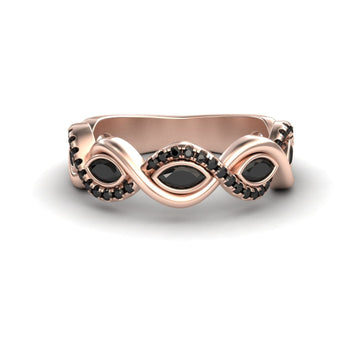
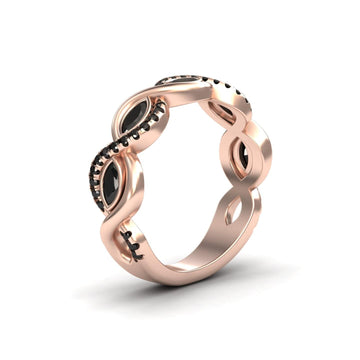
Black diamonds are associated with strength, resilience, power, inner justice and a quiet kind of independence that white or coloured diamonds do not carry in the same way. A black diamond band worn as a wedding or commitment ring signals a love that is protective, enduring and unafraid of standing apart from convention. Couples who choose this path often describe their relationship as one that has been tested and held, and they want a band that reflects that honestly rather than reaching for something purely decorative.
Why People Choose Black Diamond Bands Instead of Plain or White Bands
Plain metal bands read as clean and traditional, and all-white diamond bands carry decades of bridal convention behind them. A black diamond band sits in a different register: graphic, modern and individual enough to feel personal rather than default, while still reading as jewellery rather than costume. Many people reach for a black diamond band when they want something they will actually want to wear every day, something that suits the way they dress and the story they are telling about themselves, and something that still feels luxurious and refined alongside their other pieces.
Types of Black Diamond Bands
Accent and Channel-Set Black Diamond Bands
Accent and channel-set styles position black diamonds in a protected groove along the band or as a tight single row of pavé across the top half of the ring. These designs deliver clear black diamond presence without raising the profile of the ring significantly, which makes them practical for active hands and straightforward to stack with a solitaire or plain metal band. If you want the look of a black diamond band without adding height or weight to your finger, a channel or low-profile accent style is the most wearable starting point. Browse the broader range of jewelry with black diamonds to see how these stone arrangements carry across different settings and silhouettes.
Half, Three-Quarter, and Full Eternity Black Diamond Bands
A half eternity black diamond band places stones across the front 50 percent of the ring, a three-quarter style extends coverage further around the shank, and a full eternity band runs stones all the way around. Full eternity has maximum visual impact, but because the stones sit underneath the finger as well as on top, resizing is not possible without disrupting the design, so sizing must be accurate from the start. Half and three-quarter black diamond bands are more forgiving over the long term, easier to size within a small range and more comfortable if your ring size changes with temperature or lifestyle.
Wide, Textured, and Mixed Metal Black Diamond Bands
Wider black diamond bands, typically from 5mm upward, bring a bolder silhouette that works well as a standalone wedding band or anniversary piece without needing a solitaire alongside it. Scattered stone placement, hammered or brushed textures and mixed metal combinations such as black and yellow gold or black and white contrasts add dimension that makes these bands feel considered rather than simply wide. These black diamond bands are often the choice for people who want a single ring that carries full presence on its own, whether that is for a wedding ceremony or a day-to-day piece that holds personal weight. For men's-specific proportions and fits, the men's black diamond ring collection covers wider and heavier-gauge options.
Metals, Widths, and Comfort
Metals That Work Best with Black Diamonds in Bands
White gold and platinum create the sharpest tonal contrast against black diamonds, making the stones read as deeply dark and graphic. Yellow gold and rose gold soften the contrast and give black diamond bands a warmer, slightly more editorial quality that suits skin tones with golden or olive undertones. Titanium and tungsten carry natural darkness that complements black stones without the need for additional finishing, while blackened or black-rhodium-plated metals create an all-dark look that feels fully committed to the aesthetic. Matching your band's metal to the other jewellery you wear daily, whether that is yellow gold stacking rings or a white gold solitaire, will make the black diamond band feel part of a considered whole rather than an outlier.
Band Width, Profile, and Everyday Fit
Narrow bands, generally 2mm to 3mm, sit almost invisibly on the finger and are ideal for stacking or wearing alongside an engagement ring without competing for space. Mid-width bands from 4mm to 5mm are the most versatile and tend to suit the widest range of hand sizes and daily activities. Wide bands from 6mm upward make a statement but require attention to lifestyle: typing, lifting, wearing gloves for work or working out with metal equipment can all put extra stress on settings, and a comfort-fit interior profile with slightly rounded inner edges makes a significant difference in how a wide band feels over hours of continuous wear.
How to Wear Black Diamond Bands
Wedding, Anniversary, and Stack Styling
As a wedding band, a black diamond band pairs cleanly with a plain metal band on the same finger or opposite hand, using the contrast between simple metal and black-set stones to create definition without noise. Anniversary stacks work well when a black diamond band acts as the visual anchor, placed between a solitaire and a plain or diamond-set band so the black draws the eye and gives the stack structure. When building a stack around a black diamond ring, keeping the rest of the stack in the same metal family and limiting the mix to two or three pieces keeps the look intentional rather than crowded.
Everyday, Work, and Occasion Looks
Black diamond bands read as refined rather than flashy in everyday contexts, especially in slimmer widths and brushed or satin finishes that absorb light rather than reflecting it. For workwear and professional settings, a narrow channel-set black diamond band sits quietly and reads as personal style rather than statement jewellery. Wider or full eternity styles earn their place for evening occasions and dressier events, and because black works across almost every colour palette in clothing, the band rarely needs to be removed or swapped out to suit an outfit.
Durability, Lab-Grown Options, and Care
How Durable Are Black Diamond Bands
Black diamonds share the same hardness rating as white diamonds, sitting at 10 on the Mohs scale, which means they resist everyday scratching from surfaces like keys, countertops and fabric. Pavé and channel settings require more care than the stones themselves because prongs and shared-wall settings can be stressed by sharp lateral impacts, particularly for people who work with their hands or lift weights regularly. Solid metal bands with well-protected settings age most smoothly over time, while black rhodium or black coating on the metal itself may show edge wear at contact points after a few years of continuous wear.
Natural, Treated, and Lab-Grown Black Diamonds in Bands
Natural black diamonds form their colour through internal fractures and mineral inclusions distributed throughout the stone, while treated black diamonds begin as heavily included white or grey stones that are colour-enhanced through irradiation or heating. Lab-grown black diamonds are produced in controlled environments and share the same physical and chemical properties as natural stones, making them a practical and ethical choice for buyers focused on environmental impact and budget. The symbolism of strength, resilience and unconventional commitment carries across all three types, and the Transparency Manifest that ships with every TrueSanity black diamond band identifies exactly which type is used so buyers can make a clear and informed choice.
Cleaning and Caring for Black Diamond Bands
Soak your black diamond band in warm water with a small amount of mild dish soap for two to three minutes, then use a soft-bristled brush to gently work around each stone and the edges of the setting, rinse thoroughly under clean running water and pat dry with a lint-free cloth. Avoid ultrasonic cleaners if your band has any coated or treated metal finish, as vibration can lift or thin surface treatments over time, and keep the band away from bleach, chlorine and acetone-based products entirely. Store black diamond bands separately from other jewellery to protect pavé from scratches, and remove them before heavy manual work, gym sessions involving metal equipment or any activity where the band is likely to take a hard knock against a surface.


 CLOSE
CLOSE
 CLOSE
CLOSE
 CLOSE
CLOSE
 CLOSE
CLOSE
 CLOSE
CLOSE
 CLOSE
CLOSE


 CLOSE
CLOSE
 CLOSE
CLOSE
 CLOSE
CLOSE
 CLOSE
CLOSE
 CLOSE
CLOSE
 CLOSE
CLOSE
 CLOSE
CLOSE