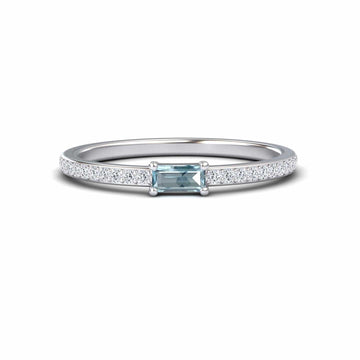
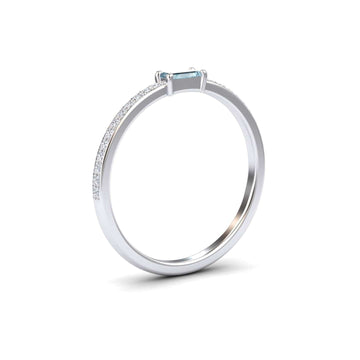
Why Choose an Aquamarine Ring
Shoppers drawn to aquamarine gemstone rings often cite that calming, water-lit quality as the reason they chose it over a more conventional option.
Aquamarine Color, Meaning, and March Birthstone Story
Aquamarine gets its name from the Latin for seawater, and the color earns that reference, ranging from pale icy blue to deep ocean teal depending on the stone's iron content. As the March birthstone, it carries traditional associations with calm, mental clarity, and courage, which is why it has been worn by sailors and navigators for centuries.
Durability of Aquamarine Rings for Everyday Wear
Aquamarine sits at 7.5 to 8 on the Mohs hardness scale, making it genuinely suitable for daily wear provided you avoid harsh abrasives and ultrasonic cleaners. It belongs to the beryl family alongside emerald and morganite, and it has no cleavage planes that make chipping a routine concern. A well-set aquamarine stone ring in a protective bezel or prong setting will hold up through normal office and casual wear without special handling.
Aquamarine Engagement and Wedding Rings
Aquamarine Engagement Ring Styles
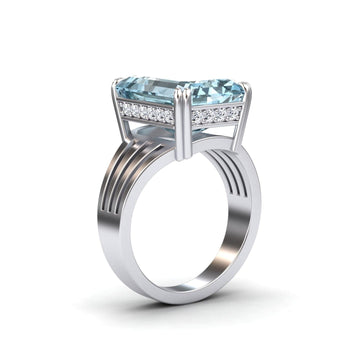
Aquamarine engagement rings have grown steadily in demand as couples look for something meaningful and distinctive beyond the traditional diamond. The stone's ocean-blue color photographs exceptionally well in natural light, and it pairs cleanly with solitaire, halo, three-stone, and vintage-milgrain settings. Oval and emerald cuts are the most requested shapes because they maximize color saturation while elongating the finger.
Wedding Rings with Aquamarine Accents
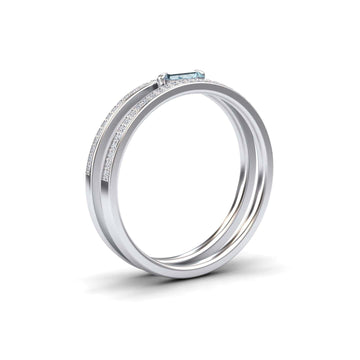
Wedding rings with aquamarine work beautifully as stacking bands or as the center stone in a low-profile setting built for constant wear. Many couples choose aquamarine wedding rings to echo the engagement stone and create a cohesive bridal set at a more accessible price point than sapphire or diamond. The blue tone reads as calm and intentional rather than flashy, which aligns with the TrueSanity design philosophy of nocturnal luxury.
Aquamarine and Sapphire Rings for Extra Contrast
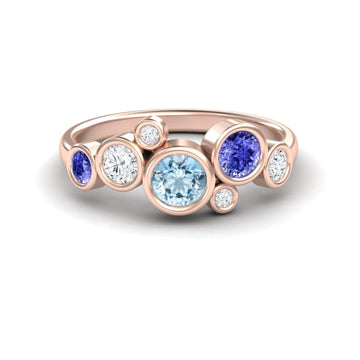
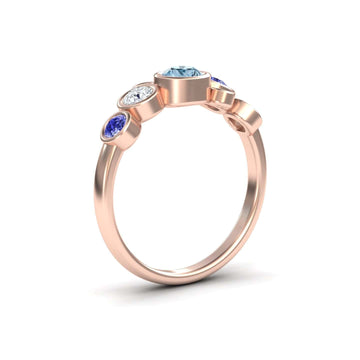
An aquamarine and sapphire ring layers two blue gemstones with distinctly different saturations, creating visible tonal contrast that a single-stone ring cannot achieve. Aquamarine's lighter, more transparent blue plays against sapphire's denser, richer tone and produces a striking two-stone or halo effect. This combination also satisfies buyers who want the emotional weight of sapphire alongside the affordability and size advantages of aquamarine.
Aquamarine Rings by Metal
Sterling Silver and Silver Aquamarine Rings
Sterling silver aquamarine rings are the most popular entry point into the category because cool silver mirrors the stone's blue-white palette without competition. A silver and aquamarine ring in a simple bezel setting is clean enough for minimalists but substantial enough to anchor a stack. Shoppers exploring a silver ring with aquamarine should check for 925 sterling marks and rhodium plating, which extends tarnish resistance significantly.
Aquamarine Rings in Gold
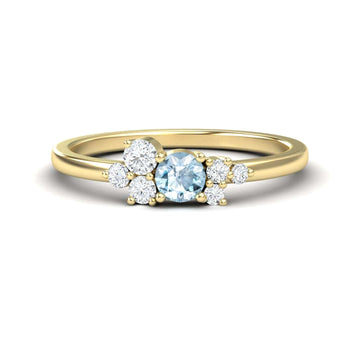
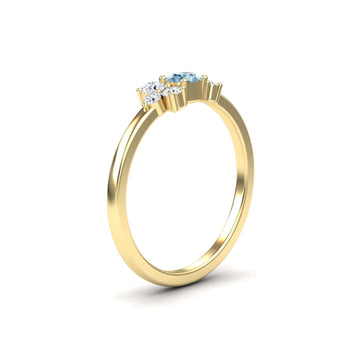
Gold aquamarine rings introduce warmth that creates a deliberate contrast with the stone's cool blue, producing a look more commonly described as sunset-over-water than pure ocean. Yellow gold grounds the aquamarine's lightness and makes it feel more saturated, while rose gold softens the overall palette toward something romantic. White gold splits the difference, combining silver's tonal harmony with gold's structural durability and prestige feel.
Aquamarine Rings for Women and Moms
Ladies Aquamarine Rings and Everyday Styles
Ladies aquamarine rings cover the full range from bold cocktail cuts to slim stacking bands, making aquamarine one of the most versatile colored-gemstone options in women's jewelry. The stone's calm color reads as professional in structured office settings but also carries well at weekend markets and coastal events. Browsing aquamarine rings for women by occasion filter is the fastest way to narrow from the full collection to the right weight and setting style.
Aquamarine Mothers Rings and Family Pieces
An aquamarine mother's ring makes a natural choice for March-born children or for mothers who want a calm, lasting stone that isn't prone to dramatic price swings. Multi-stone family rings often pair aquamarine with birthstones in complementary blue or green tones, and aquamarine's clarity makes it easy to read even at small carat weights. TrueSanity discloses the origin and treatment status of every stone used in mothers' ring configurations, so the gift carries full provenance transparency.
Real, Natural, and Genuine Aquamarine Rings
TrueSanity's Transparency Manifest discloses treatment status on every genuine aquamarine ring so you know exactly what you are buying.
Natural and Genuine Aquamarine Stone Rings
Natural aquamarine rings use mined beryl that has not been created in a lab, and most natural aquamarine on the market has been heat-treated to reduce greenish tones to a purer blue, a standard and stable process the industry accepts openly. When browsing aquamarine stone rings, look for even color distribution, strong clarity, and an honest origin note alongside the price.
How to Choose Real Aquamarine Rings for Sale
Real aquamarine rings can be verified through several practical cues: natural aquamarine shows slight color zoning when tilted, feels noticeably cool to the touch initially, and will not have the perfectly uniform clarity of glass simulants. When you search aquamarine rings for sale, prioritize sellers who name the stone's origin or country, disclose treatment, and provide a return window. TrueSanity lists all of these details on every product page rather than burying them in fine print.
Bands, Blue Shades, and Minimal Designs
Aquamarine Band Rings and Stackable Styles
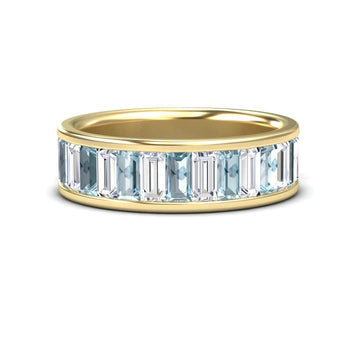
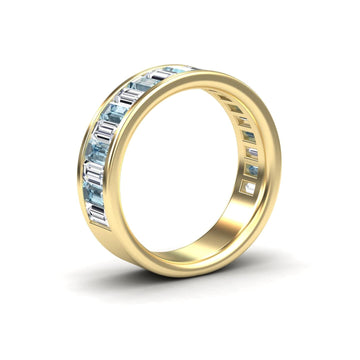
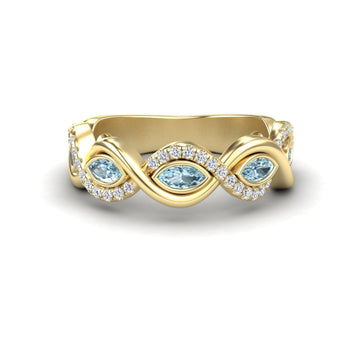
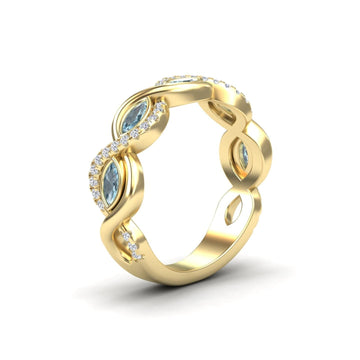
An aquamarine band ring typically features a row of small aquamarine stones channel-set or bezel-set around part or all of the band, creating a continuous wash of blue that reads differently from a solitaire. Band styles work well as standalone fashion pieces or as stacking partners for an engagement ring, and they maintain a lower profile that suits active daily wear. The even color of well-matched aquamarine across a band is one of the clearest demonstrations of the stone's natural translucency.
Blue Aquamarine Rings and Color Intensity
Blue aquamarine rings marketed specifically by color intensity reflect a real grading distinction: stones with deeper, more saturated tones are rarer and priced accordingly. Most aquamarine falls in the light-to-medium blue range, which is exactly the pale ocean tone most buyers associate with the name, but "Santa Maria" and "Espirito Santo" origin stones command premiums for exceptional depth. Understanding color grade before you shop prevents the surprise of receiving a stone that looks more transparent in person than it did on a screen.


 CLOSE
CLOSE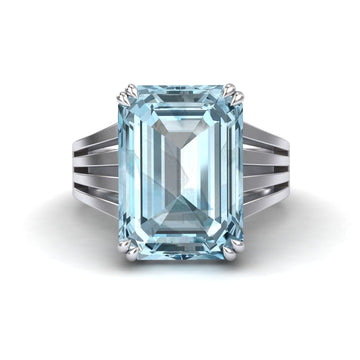
 CLOSE
CLOSE
 CLOSE
CLOSE
 CLOSE
CLOSE
 CLOSE
CLOSE
 CLOSE
CLOSE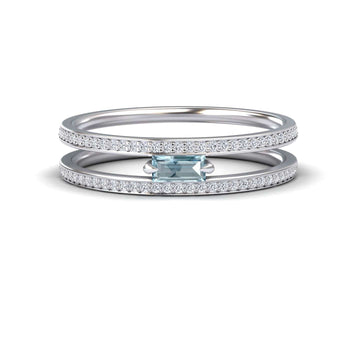

 CLOSE
CLOSE