

Everything You Need to Know About Ruby Engagement Rings
Quick Summary
Ruby engagement rings offer genuine hardness, rare natural color, and centuries of documented significance. This checklist walks through every decision point before buying: what rubies actually are, how to evaluate color, which treatments require disclosure, which settings suit daily wear, and what your certificate should confirm. Complete transparency throughout.
TABLE OF CONTENTS
- Meaning and History of Ruby Engagement Rings
- The Four Cs for Ruby Engagement Rings
- Ruby Shapes and Cuts
- Best Settings for Ruby Engagement Rings
- Where Natural Rubies Come From
- Lab-Grown vs Natural Rubies
- Best Metal Choices for Ruby Engagement Rings
- Your Pre-Purchase Checklist
- Our Favorite Ruby Rings
- Frequently Asked Questions
Meaning and History of Ruby Engagement Rings
Rubies appear in the historical record earlier than almost any other gemstone used for adornment. Sanskrit texts from ancient India called ruby "ratnaraj," meaning king of gemstones. That reverence held across cultures that had no contact with each other, which says something about how consistently this stone has commanded attention.
By the 17th and 18th centuries, European families were pairing rubies with diamonds in engagement jewelry, the red and white contrast representing passion and purity. That combination remains one of the strongest design directions in ruby engagement rings today.
The red color carried consistent associations across history: passion, courage, and protection. For an engagement ring, that symbolism suits the context. Ruby is also July's birthstone and the traditional gift for 15th and 40th anniversaries, which adds personal significance for buyers with either connection.
The Four Cs for Ruby Engagement Rings: What the Priorities Are
The four-C framework applies to rubies, but the weighting is different from diamonds. Knowing the priority order prevents paying for the wrong qualities.
Color: The Primary Value Driver
Color accounts for the majority of a ruby's value. The benchmark is "pigeon's blood red": a pure, vivid red with a slight blue undertone and strong saturation. Burmese stones have historically produced it most consistently.
In practice, rubies range from pinkish-red to deep crimson. Stones trending too pink may be reclassified as pink sapphire under certain grading standards, which affects value and documentation. When evaluating, view the stone in natural daylight, incandescent light, and fluorescent light. A quality ruby holds its saturation across all three.
Clarity: Different Rules Than Diamonds
Rubies are Type II gemstones. Inclusions are the norm, not the exception, and a completely clean ruby is genuinely rare. What matters is whether inclusions affect transparency, brilliance, or structural integrity. Surface-reaching fractures are a durability concern. Inclusions visible only under magnification that do not affect appearance are standard for the category.
Cut: How It Affects Color Display
In ruby engagement rings, cut serves color, not brilliance. A well-cut stone shows consistent saturation across the face with no dark or washed-out zones. Because fine ruby rough is valuable, cutters sometimes prioritize weight retention over ideal proportions. Evaluate the stone face-up in normal lighting before deciding.
Carat Weight: Exponential Pricing at Higher Sizes
Ruby pricing does not scale linearly. A 2-carat stone of equivalent quality costs significantly more than double a 1-carat stone because larger fine rubies are disproportionately rare. Most ruby engagement rings use center stones between 0.5 and 2 carats. Current market pricing runs $2,500 to $10,000 per carat depending on color, origin, and clarity.
Ruby Shapes and Cuts: How Each One Changes the Ring
The shape of a ruby changes the entire personality of the ring. Some cuts maximize brilliance, while others emphasize color depth, symmetry, or vintage character. The same ruby can feel classic, modern, soft, or dramatic depending on the cut.
Round
The most versatile cut for ruby engagement rings. Round cuts maximize brilliance and suit every setting style from simple solitaires to elaborate vintage designs.
Oval
Oval cuts create an elongated proportion that reads larger than their carat weight. The shape suits a wide range of finger types and flatters the ruby's color at multiple angles.
Cushion
Cushion cuts have soft corners and larger facets that emphasize color depth over brilliance. Well suited to vintage and Art Deco-inspired settings, particularly in a diamond halo with detailed metalwork.
Emerald and Asscher
Step cuts that prioritize color saturation and clarity over brilliance. A high-quality ruby reads exceptionally well in an emerald cut, giving the ring an architectural, modern quality.
Pear and Marquise
Both elongated with pointed ends. High visual impact, make fingers appear longer, and produce ruby engagement rings that read as distinctive rather than conventional.
What are the Best Settings for Ruby Engagement Rings
The setting changes how a ruby engagement ring feels on the hand. Some settings make the ruby look larger or brighter, while others focus on protection, contrast, or vintage detail. The right setting depends as much on lifestyle as aesthetics.
Solitaire Ruby Engagement Rings
A solitaire setting places a single ruby on a clean band with no competing stones. It keeps the focus entirely on the ruby’s color and works with almost every metal type and wedding band style.
Halo Ruby Ring Settings
Halo settings surround the ruby with smaller accent stones, usually diamonds. This adds visual size, increases contrast, and creates a more dramatic overall look.
Three-Stone Ruby Engagement Rings
A center ruby paired with two side stones. Diamond accents create contrast, while ruby side stones produce a richer, color-forward design. The style also carries the traditional symbolism of past, present, and future.
Bezel Ruby Ring Settings
A bezel setting wraps metal around the ruby’s edges for extra protection. It creates a sleek, modern appearance and works especially well for everyday wear.
Pavé Ruby Ring Settings
Pavé settings feature small accent stones along the band that add extra sparkle without overpowering the ruby. They suit both classic and modern ring styles.
Vintage and Art Deco Ruby Rings
Filigree, milgrain detailing, and geometric metalwork pair naturally with rubies. These settings emphasize craftsmanship and give the ring a stronger vintage character.
Where Natural Rubies Come From and Why It Matters
Where a ruby forms affects its color characteristics, market positioning, and price. These are the origins that matter to the fine jewelry market:
Burmese Ruby
Burmese ruby is the historical benchmark. Stones form in the Mogok Valley and later the Mong Hsu region of Myanmar. Chromium-dominant coloring produces the warm, vivid red with slight blue undertone that defines pigeon's blood color.
Burmese origin commands a significant premium, often 30% to 50% above comparable stones from other sources, driven by 500-plus years of market reputation rather than an objective quality difference that always holds at every price point.
Mozambique Ruby
Mozambique has become the most significant modern ruby source. Stones from the Montepuez region show purplish to dark red color with strong saturation and, in many cases, better clarity than comparable Burmese material. The market discount relative to Burmese origin creates genuine value opportunities for buyers comparing stones side by side.
Thai Ruby
Thai rubies tend toward darker red with brownish secondary tones. Higher iron content produces a less vivid color than chromium-dominant stones. Thailand has been historically significant as a cutting and trading center rather than a premium origin. Thai rubies trade at lower price points for equivalent size.
Madagascar Ruby
Madagascar rubies range from red to orange-red with good saturation. Quality varies depending on the deposit. These stones do not command the same premium as Burmese or Mozambique material but produce commercially strong options at accessible price points.
Afghan Ruby
Afghan rubies range from light to dark red with varying intensity. Color consistency is less reliable than other major sources. Some fine material exists, but production is limited and supply irregular.
Explore the full Ruby Jewelry Collection with complete origin disclosure and treatment documentation on every piece.
Lab-Grown vs Natural Rubies: What Actually Changes
Lab-grown rubies are chemically and physically identical to natural rubies. Same aluminum oxide structure. Same chromium coloring. Same hardness of 9 on the Mohs scale. Same optical properties. Standard gemological testing cannot distinguish them from natural stones without specialized equipment.
The differences that matter for buyers:
Pricing: Lab-grown rubies typically cost 30% to 50% less than natural rubies of comparable appearance. For buyers prioritizing size and color appearance over geological origin, the cost difference is significant.
Clarity: Controlled growth produces fewer inclusions than geological formation. Lab-grown rubies generally show better clarity than natural stones at the same price point.
Treatment: Natural rubies are commonly heat treated to improve color and clarity. Lab-grown rubies typically require less treatment because the growth process produces more consistent material.
Origin disclosure: Lab-grown origin must be disclosed clearly. At TrueSanity, it appears in the product title and the Transparency Manifest, not in fine print.
For buyers who prioritize appearance, durability, and value over geological rarity, lab-grown is a legitimate choice that does not compromise on the ring's visual impact or long-term wearability. For buyers who specifically want natural origin and documented geological history, natural is the right direction.
Both are available at TrueSanity with full disclosure. Learn more about ruby origins and treatments on the July Birthstone Ruby here.
Best Metal Choices for Ruby Engagement Rings
The metal changes how a ruby engagement ring looks and feels overall. Some metals make the ruby appear warmer and richer, while others create stronger contrast or a more modern appearance.
Yellow Gold Ruby Rings
Yellow gold is the classic choice for ruby engagement rings. Its warm tone complements the ruby’s red color and suits vintage or traditional designs especially well.
Rose Gold Ruby Rings
Rose gold creates a softer, romantic look that pairs naturally with rubies. It feels modern without looking overly trendy and works well in contemporary settings.
White Gold Ruby Rings
White gold creates strong contrast against a ruby center stone. The bright metal makes the red appear more vivid and suits cleaner, modern ring styles.
Platinum Ruby Rings
Platinum is durable, naturally white, and highly secure for everyday wear. It costs more than gold but requires less long-term maintenance.
Blackened Gold Ruby Rings
Blackened or oxidized gold creates a dramatic, high-contrast look. The darker metal makes the ruby appear deeper and more intense visually.
Your Pre-Purchase Checklist for Ruby Engagement Rings
Use this before committing to any ruby engagement ring purchase.
Confirm Treatment Disclosure
Heat treatment is the most common and widely accepted treatment for natural rubies. Fracture filling is less common in rubies than heat treatment, but it is a more intervention-heavy process. If present, it should always be clearly disclosed because it affects long-term care expectations and treatment transparency standards.
Request Certification
GIA and AGL are the recognized authorities for ruby grading and origin documentation. A certificate confirms the stone's identity, treatment status, and in many cases origin. For any significant purchase, documentation is not optional.
Evaluate Color in Multiple Light Sources
View the stone under natural daylight, incandescent light, and fluorescent light before committing. A ruby that looks vivid in one light source but flat in others is likely lower saturation than it appears in optimized store lighting.
Verify Origin Documentation
If origin matters for price or provenance reasons, ask for a certificate that states it explicitly. "Burmese" or "Mozambique" listed without documentation is a seller claim, not a verified fact.
Match the Setting to the Wearer's Lifestyle
Active, hands-on wearers should prioritize bezel or lower-profile settings. Buyers who will follow a careful care routine have more setting options. Be honest about how the ring will actually be worn before choosing a setting style.
Understand Resizing Limitations
Most ruby engagement rings can be resized within one to two sizes without issue. Rings with pave around the full band, tension settings, or very intricate designs require more care during resizing. Confirm resizing options with the jeweler before purchasing.
Insure Before You Wear
Get the ring appraised and insured before it leaves the store or arrives at your door. Keep all receipts, certificates, and appraisal documents. Update the appraisal every few years as ruby values change.
Ruby Engagement Rings Feel Different for a Reason
Ruby engagement rings have a level of visual presence that traditional white diamonds rarely create. The color draws attention immediately, but the right ring still depends on balance: the cut, the setting, the metal, and how the ruby actually sits within the design.
Some ruby rings lean vintage and ornate. Others feel sharp, minimal, and modern. That flexibility is part of why rubies continue to hold attention even as engagement ring trends change.
If you are comparing styles, True Sanity offers ruby engagement rings across different cuts, settings, and metal types, making it easier to find a design that feels personal instead of generic.
Our Favorite Ruby Rings
We're all about ethically sourced ruby jewelry with complete transparency—no hidden costs, no sketchy supply chains. Just beautiful stones and honest pricing.
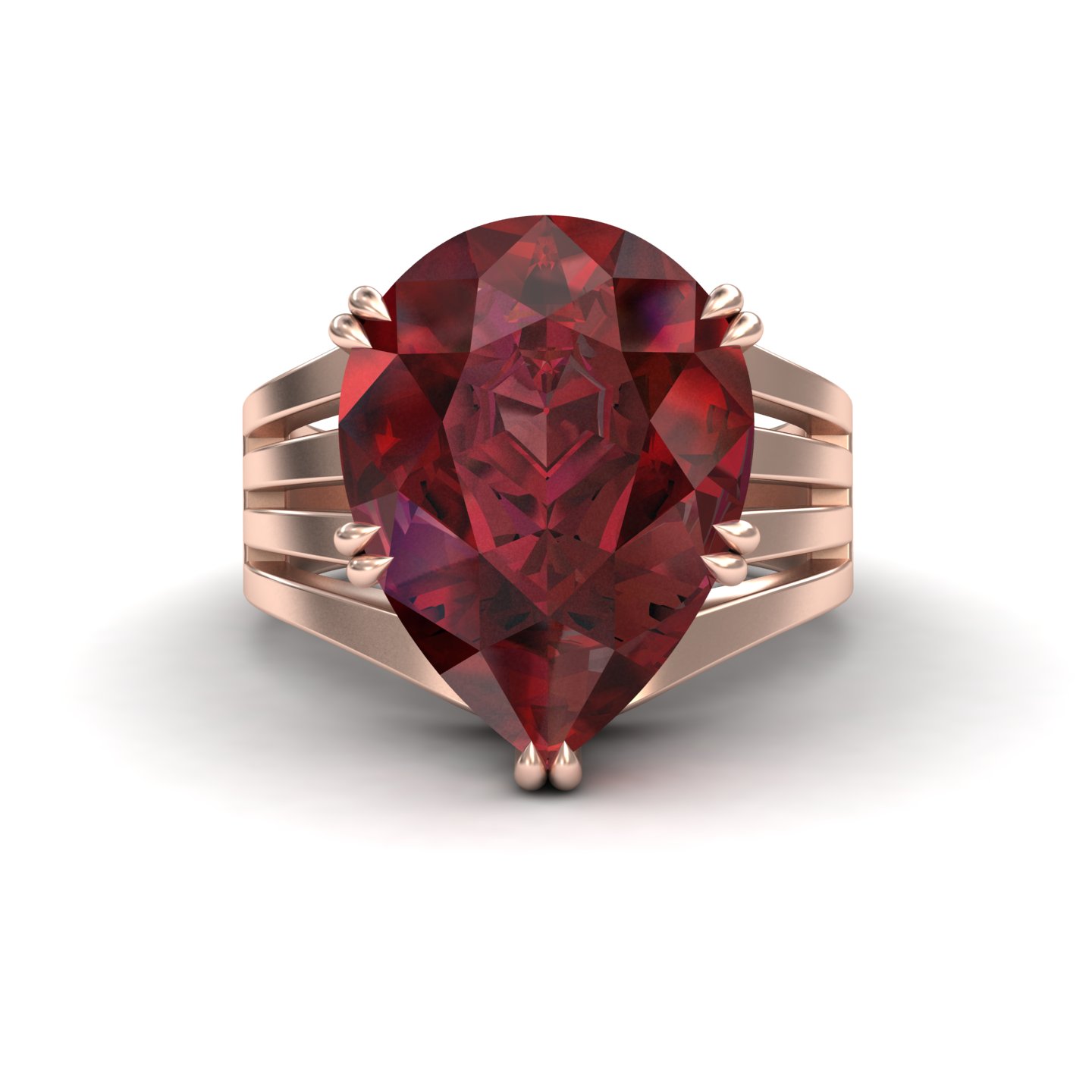
Lab Grown Ruby & Diamond Regal Ring - Anna
This pear-shaped lab-grown ruby paired with white diamonds makes a statement without trying too hard. Available in 14K white, rose, yellow, or blackened gold. Total weight: 11.27 ct with 0.24 ct of accent diamonds.
View Details →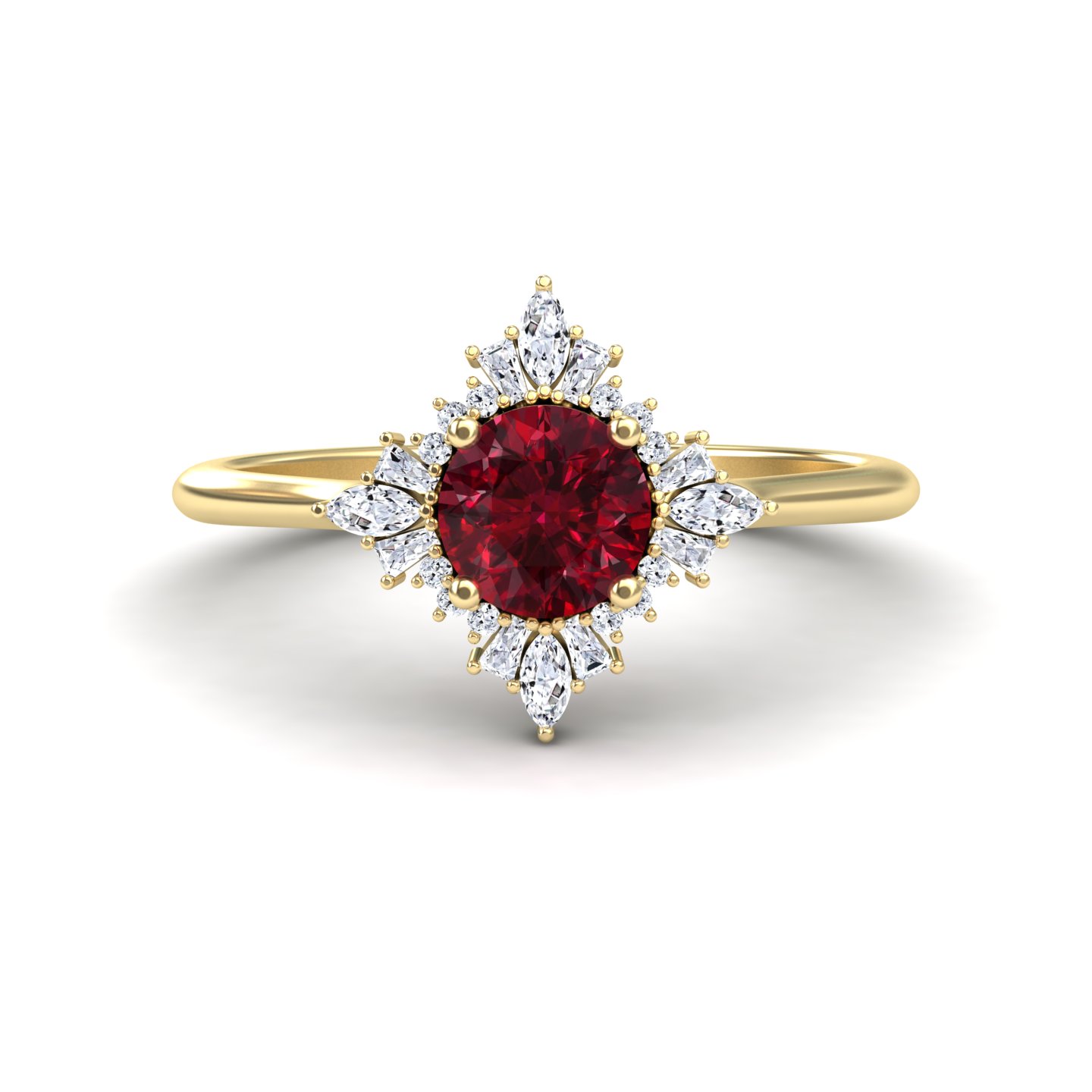
Ruby & Diamond Vintage-Inspired Starburst Ring - Delia
Vintage Art Deco vibes with a 0.49 ct center ruby surrounded by a starburst halo of 0.60 ct diamonds. This one's got serious character and works whether you're into retro styles or just appreciate good design.
View Details →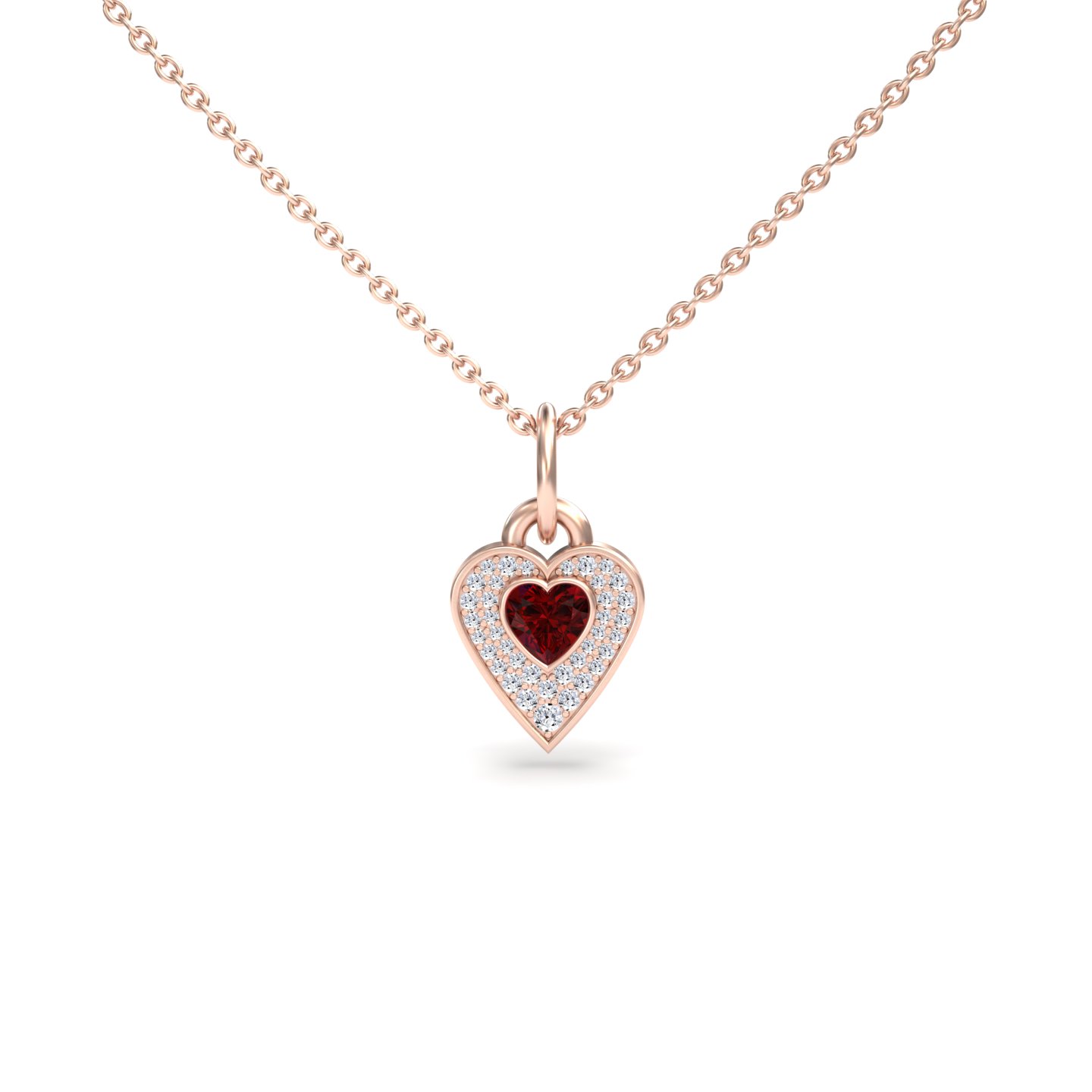
Lab Grown Ruby & White Diamond Heart Necklace - Tara
Not a ring, but this heart necklace (0.60 ct lab-grown ruby, 0.229 ct diamonds) pairs perfectly with a ruby engagement ring. Sometimes you want to coordinate your jewelry without being too matchy-matchy.
View Details →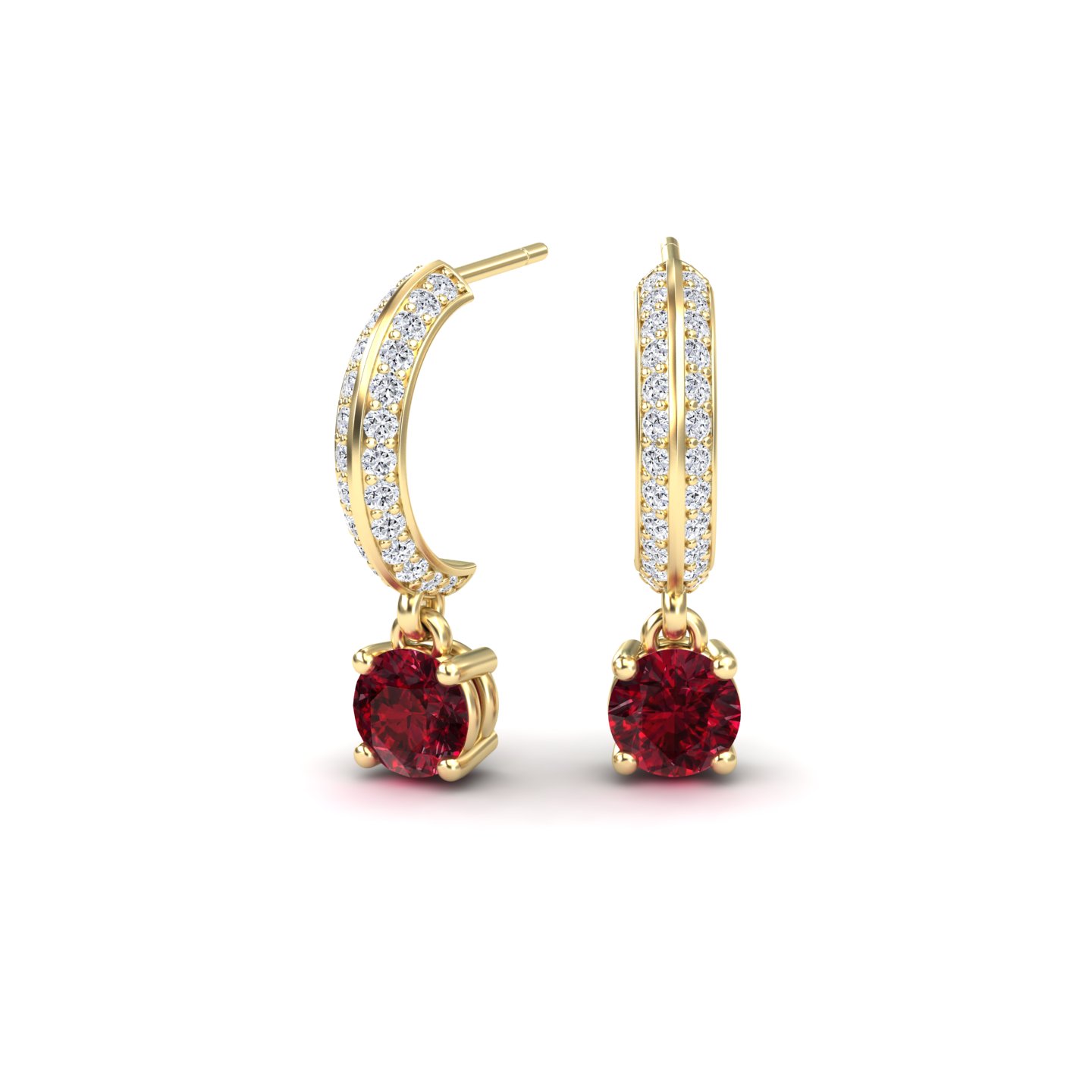
Ruby & Diamond Pavé Drop Hoop Earrings - Serena
Emerald-cut rubies (0.50 ct) with pavé-set diamonds (0.40 ct) in drop hoops. These complete a bridal jewelry set without feeling like you bought everything from the same catalog. Available in all our metal options.
View Details →